🥾Three Days in Beskid Wyspowy: What a Hiking Workshop Taught Me About Photography, Discomfort, and Real Learning
🇵🇱 Przeczytaj ten blog po polsku
Three days in Beskid Wyspowy. Two of them in rain. 40.1 kilometers, 1,797 meters of ascent, two nights sleeping outside, wet shoes, fog, mud, poor sleep, and a backpack that started the first morning at almost 20 kilograms.
This was my "Długie Szlaki" workshop with Łukasz Supergan. In English, Długie Szlaki means Long Trails. That name is accurate.
Łukasz is a Polish adventurer, long-distance hiker, expedition professional, photographer, and author. He has walked through Greenland, Iceland, the Carpathians, Kilimanjaro, and far beyond. He has been leading these hiking workshops for several years, though I only found them on Instagram last year.
I wanted to learn from someone like that. Not from a gear review or a YouTube video. From the real thing, in real conditions.
Why I Joined
When I first saw the workshop, I signed up almost immediately. Then, after returning from a trip to Elba Island, I injured my knee and had to cancel. I was not confident I could complete the hike.
This year, as soon as places opened again, I signed up without hesitation.
I came with specific goals: to learn how to pack lighter, to understand water and food planning on a long trail, to sleep under a tarp for the first time, to use a compass and paper map in real terrain. And since Łukasz is also known as a photographer, I was curious about his thinking on gear. As someone who works professionally behind the camera, this question felt personal: what do you carry when the goal is to stay inside the experience, not document it from a distance?
I was not nervous before the start. I was genuinely curious. But I already knew I was overpacked.
Day 0: The Quiet Before
The official workshop began on 15 May, but I traveled a day earlier to arrive rested.
From Warsaw by Pendolino to Kraków, then a bus toward Mszana Dolna. I managed to catch a bus one hour earlier than planned. The driver let me on without a reservation for that departure. Small things.
I did some grocery shopping in Mszana Dolna, found my accommodation at a small place called Lavandove, and spent the evening quietly. Two small terrier-like dogs lived there, which felt familiar. I cooked food, checked the weather forecast, watched the sunset, and went to sleep early.
That evening had a particular quality: everything calm, settled, before the real days began. I slept very well, which mattered more than I expected, because the next two nights would be completely different.
Day 1: Maps, Views, Fire, and the First Tarp Night
We started at 9:00. Twelve participants, plus Łukasz.
The first section moved through Mszana Dolna itself, mostly on asphalt, before opening into fields and then proper trail. The first day was still warm and relatively kind. The serious rain had not yet arrived.
Early in the day, with my iPhone in hand, I found myself doing something that photographers tend to do in group situations: noticing the moment that deserves to be kept. "Okay, let's take a photo here." I said it a few times that day, and people were happy to stop. Not because it was planned, but because the instinct was there.
We made our first real stop in a covered outdoor shelter where Łukasz ran a session on route planning: how to read printed maps, how to think about route structure, which applications support the work. This set the tone for the whole three days. It was not only walking. It was walking, pausing, learning in actual terrain, and then continuing.
At Ostra (around 780 m), brief rain appeared. Cows on the trail. Later, a session on water treatment: purification tablets, filters, UV light, and when each makes sense. Then compass work: azimuth, how to read terrain against a map, how to orient yourself when the trail is not obvious. This was one of the sections I found most immediately useful.
At Polana Łąki (around 1,000 m), the view opened up. At Jasień (1,062 m), we could see the Tatras in the distance, still carrying snow on their peaks. Layers of ridges receding into cloud and white peaks beyond. A view that makes you stop and reach for the phone without thinking.
We arrived at Polana Wały around 17:30, our place for the first night. Łukasz explained tarp setup. Then everyone had to build their own.
I was the last one done that evening. After the explanation, my mental model of the geometry shifted and I started overthinking it. Eventually it worked, but it took longer than it should have.
The evening, though, was something I will remember.
A fire. Warm clothes. Tired legs. Food. People settling in after a long first day. There is something very old about gathering around fire after a day of walking. It does not require explanation. It just feels right.
The first night itself was hard. I had chosen a slightly sloped spot, my mattress kept sliding, and I had set up slightly away from the group near the trail, which left me feeling more exposed than I wanted. A few days before the trip, I had read about a bear spotted in the same region. My mind decided to remember this at exactly the wrong moment. In a tent, there is a wall between you and the outside. Under a tarp, that wall does not exist. The forest is right there. I slept badly.
But the next morning was worth it.
Day 2: Fog, Mogielica, Salamanders, and the Food Truck
I was one of the first people awake.
The morning had a quality that is difficult to describe in any language other than light. Dense fog. The kind that makes the world go soft and close. Everything slightly diffused, slightly blue-grey. The tarp was wet. The grass was wet. The forest was still.
As a photographer, this kind of light does something to you. You reach for the camera before you have fully woken up. The shapes in fog, the way the trail disappears after twenty meters, the silhouette of a tarp through mist: these are not dramatic images. But they are real, and they are worth keeping.
Rain started early in the day.
We hiked toward Mogielica, the highest point on the route at 1,170 meters. There is an observation tower at the top. I climbed it and saw almost nothing. Total fog. Which, in its own way, was more interesting than a clear view would have been.
Łukasz ran a food session under the tower: what to carry, how to think about calories and weight, what works over multiple days.
On the trail that afternoon, we kept coming across salamanders. Black and yellow, slow, appearing on the wet path without concern for us. There is something about that kind of small and specific detail that stays with you longer than the big dramatic views. The instinct to stop, look closely, and notice the small thing: that is also part of photography. And part of being on a trail properly.
Then, wet and tired, somewhere in the fog, the trail crossed an asphalt road.
There was a food truck.
An actual food truck. On a mountain trail. In rain.
I had a kebab with fries and salad. It was one of the best things I have eaten outdoors. Łukasz said he would tell this story to his friends for a long time. I understand why. Some trail moments cannot be planned. They simply appear, and you laugh, eat, and keep walking.
We reached the second camp around 17:15. This time I set up the tarp quickly. On the first day I was last. That evening I think I was among the first. Something had clicked: I found a method that felt similar to pitching a tent, and it worked for me.
The second night was still not easy. Tired, wet, talking neighbors, and I had deliberately tested sleeping with only a foam mat. That was a mistake. Comfort matters, especially when you have a full hiking day ahead. Clear lesson learned.
Day 3: Leave No Trace, Modyń, and the Way Home
The third morning felt different. Quieter. More settled.
Łukasz ran a Leave No Trace session: how to camp in the field responsibly, how to separate where you sleep, where you collect water, and where you manage waste, so that after you leave, the place is as you found it.
We passed through Modyń and arrived in Kamienica around 13:00. Route complete.
From Kamienica, a bus to Kraków. Most people left quickly, but a few of us stayed and sat together for food. One of the best conversations of the entire trip happened there, not on the trail but after it. A participant named Zuza, talking about travel, her upcoming hike, life, and some bigger questions about how we choose to live. Easy and honest. The kind of conversation that goes wherever it wants.
She said something that stayed with me. She noted that everyone in the group had seen the weather forecast. Everyone knew it would rain. And everyone came anyway. And everyone finished. That says something about the people who chose to be there.
I took the 19:00 Pendolino back to Warsaw, first class both ways, which was the right decision for that journey home. Arrived around 22:00.
One last detail worth keeping: my La Sportiva hiking shoes had been slowly failing before the trip. After three wet days, they were clearly finished. I packed them home and threw them away the next morning. They had served me for more than two years. I ordered the same model again.
My bed and pillow that night felt like a genuine luxury.
Recovery took nearly a week. Taking Monday off was a very good decision.
Photography Without Heavy Gear
I brought only my iPhone 17 Pro Max.
As a portrait photographer based in Warsaw, I spend most of my professional work thinking carefully about cameras, lenses, and the quality of the final image. So this was a deliberate choice, not a compromise. For client work, for portrait sessions, for personal branding photography: the full setup matters. Camera, lens, light, careful editing. That is the context where professional equipment serves the work.
But on this trip, the goal was different.
The goal was to stay inside the experience. To walk with the group. To set up a tarp when tired. To help someone fix their stove. To sit by the fire. To sleep badly and keep going the next day. A full camera system would have created a small but constant additional role: the photographer documenting, rather than the person who is simply here.
With my iPhone, I was just here. And when a moment asked to be kept, I kept it. The foggy morning. The salamanders on the wet path. The food truck in the rain. Group photos at viewpoints. Camp life under tarps. Small images, but real ones.
I think this is something worth remembering: photography is not only about the output. It is about how you see. And the habit of noticing, of pausing to look at what deserves attention, belongs to the photographer even when no professional camera is present.
Some people call this mindful photography. I think it is simply photography done with full attention.
Presence and attention are part of the craft too.
Why Discomfort Can Be Part of Wellbeing
I want to be careful here, because it would be easy to make this sound like a "step outside your comfort zone and grow" kind of piece. I find most of those unconvincing, and I do not want to write one.
This trip was not about proving something. It was not a survival situation. No real danger, no lack of water, no extreme conditions.
But it was genuinely uncomfortable: wet shoes, two poor nights, a heavy backpack, cold stops, fog, mud, the constant need to keep moving regardless of how you feel.
And that discomfort was useful in a specific way.
It showed me that my body has reserves I sometimes forget are there. My regular training, daily walking, strength work, running and mobility, created a physical foundation that meant I arrived on Day 3 still stable and capable, even after two difficult nights.
It showed me something about acceptance. Wet shoes are wet shoes. If you spend energy resisting that fact, you suffer more. If you accept it and keep walking, you manage. This sounds simple. It is simple. But it needs practice.
And it showed me something about attention.
On the trail, the noise that fills everyday life becomes quieter. There are no notifications. No background tasks. You walk, breathe, notice the path, feel the backpack, watch where you step. That narrowing of attention is good for the mind, and it is good for creativity too.
Fog, rain, wet gear, the texture of mud, the way tired people move at the end of a long day: these are things worth noticing. Noticing them, the way a photographer learns to notice things, keeps you connected to the actual world. And there is something clarifying about that connection. Something that comfortable routines, as valuable as they are, cannot always provide.
Wellbeing includes comfort. Sleep, nutrition, recovery, routine: I believe in all of these and live by most of them. But wellbeing also includes moments that test you. Consciously chosen, well prepared, with good people around you. Those moments can show you who you are when the comfortable structure is not available.
What I Came Back With
I returned home tired, relieved, and genuinely happy.
Łukasz taught me more in three days of real walking than I would have absorbed from hours of gear reviews or planning videos. Not because theory is useless, but because knowledge only becomes clear when you carry it. When your backpack is 20 kilograms and you have 13 hours of hiking ahead, you learn very quickly what you actually need and what you have been carrying out of habit.
A few practical things I will do differently next time: carry less food and less water, but plan sources better. Use one durable internal bag inside the backpack to keep things dry, rather than relying only on a rain cover. Bring an inflatable mattress. Move toward an ultralight tent as my main shelter. Keep the tarp as a useful skill and backup option. Keep the water filter. Keep trekking poles. Always carry a paper map and compass.
But beyond gear, this trip reminded me of something I sometimes forget.
I have been hiking since around 2008. Nearly 20 years of multi-day trips, wet hikes, tent nights, long mountain days. Sometimes I still feel like I need to prove I belong in these environments. This trip reminded me that the experience is real. The reserves are there. I simply do not always trust them.
There is an idea in a song by Vladimir Vysotsky: if you want to know who someone is, take them to the mountains. I thought about it a few times during those three days. Mountains are simple and honest. The rain is real. The backpack weight is real. The need to keep walking is real. And in that simplicity, people show themselves more honestly than in most other places.
I came back with more confidence, more respect for planning, more clarity about my gear, and one small, simple reminder that I think will stay useful for a long time:
Knowledge becomes real only when you test it. Not on a perfect day. Not in theory. But somewhere on a wet trail, with tired legs, cold hands, a heavy pack, and people around you who keep walking too.
This trip was part of a hiking workshop called "Długie Szlaki" led by Łukasz Supergan. If you are interested in long-distance hiking workshops in Poland, his workshops are worth looking up.
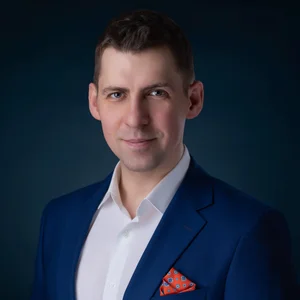
Vova Khomenko is a portrait photographer based in Warsaw and the author of the Creative Wellbeing section on this blog.